



Self-seal bags: clear bags with an adhesive lip
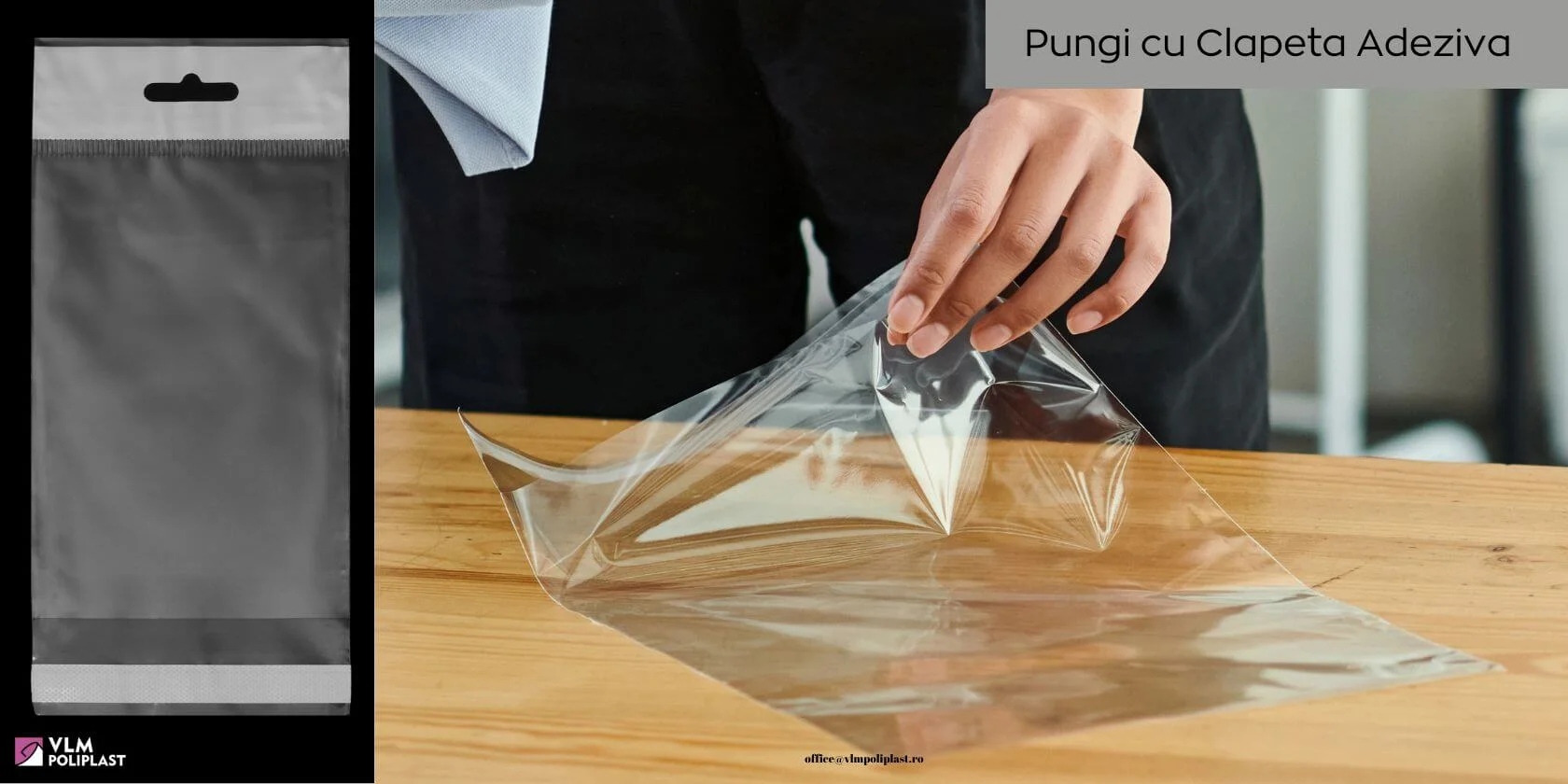
Self seal bags are clear plastic bags with an adhesive strip on the flap: fold it over, press, and the bag is closed, with no tape and no machine. The adhesive is permanent for one-time sealing or resealable for bags that are opened and closed again.
VLM Poliplast converts self-seal bags to order in BOPP, CPP and LDPE, from small jewellery pouches to garment bags, with an optional printed header, a euro hole for hanging display and vent perforations, printed up to 8 colours.
In the trade they are also called cello, cellophane or OPP bags, although the film is BOPP, oriented polypropylene, rather than cellulose. They close by hand, not on automatic packing lines, and food-contact structures ship with a declaration of compliance to Reg. (EC) 1935/2004 and (EU) 10/2011.
Three films, three jobs
| Film | Strength | Typical starting point when |
| BOPP | Glass-clear and stiff, a retail look | Presentation matters: jewellery, cards, favours, retail display |
| CPP | Soft and flexible | The product folds or moulds into the bag |
| LDPE | Tough, handles rough treatment | The pack passes through many hands: garments, parts, accessories |
Options
Permanent adhesive suits one-time sealing, on cards, samples and favours. Resealable adhesive suits products the customer opens and checks, such as garments. A printed header with a euro hole is what the bag needs when it hangs on a retail hook.
- Permanent adhesive: seals once; opening shows, so tampering is visible
- Resealable adhesive: opens and closes repeatedly without damaging the bag
- Header, plain or printed: carries the brand above the product
- Euro hole: standard or custom, for retail hook display
- Vent perforations: for products sensitive to condensation
- Sizes and gauge: from 50×50 mm pouches to 400×450 mm garment bags, typically 30–40 µm, sold in sets of 1,000
Where self-seal bags are used
Garment brands use resealable bags for t-shirts, socks and bed linen, so customers can open and check without ruining the pack. Small BOPP pouches carry jewellery, accessories, magnets, cards and gift favours; stationers pack documents, invitations and books; tackle shops bag bait and rigs; and workshops pack small technical parts. Dry food such as biscuits, confectionery and spice multipacks uses food-contact structures.
Which bag for which product
| Product | Film and adhesive | Options that matter |
| Jewellery, cards, gift favours | BOPP, permanent adhesive | Printed header, euro hole for display |
| Garments: t-shirts, socks, bed linen | CPP or LDPE, resealable adhesive | Larger sizes, euro hole on request |
| Small parts and accessories | LDPE, permanent or resealable | Vent perforations against condensation |
| Dry food: biscuits, confectionery, spices | BOPP, food-contact declared, permanent | Printed branding, declaration of compliance |
Packing fashion orders? The self-seal bag protects the garment inside the parcel; for the courier leg itself, pair it with the opaque mailer built for shipping.
Recyclability
BOPP and CPP self-seal bags are mono-material polypropylene, designed for compatibility with the PP stream; LDPE bags are designed for compatibility with the PE film stream. Recyclability is assessed on the complete bag, adhesive strip included, and documented per delivered structure.
Why buy self-seal bags from VLM Poliplast
Cutting, adhesive application, bag forming, header and euro hole punching all happen in our own factory in Romania, in the EU, to your specification, with physical samples for validation before an order and a technical data sheet with every delivery, under ISO 9001, ISO 14001, ISO 22000 and ISO 45001.
Frequently asked questions
What is the difference between permanent and resealable adhesive?
Permanent adhesive seals once: after opening, the strip no longer sticks, so tampering shows. Resealable adhesive opens and closes repeatedly, which suits garments and any product customers check before buying.
Are cellophane bags and self-seal bags the same thing?
In shop talk, usually yes: what is sold as cellophane bags today is mostly BOPP film with a self-seal lip, not true cellulose cellophane. BOPP gives the same glass-clear look with better strength and moisture resistance.
Can self-seal bags be used for food?
Yes, for dry food such as biscuits, confectionery and spices, on structures declared for food contact, delivered with a declaration of compliance to Reg. (EC) 1935/2004 and (EU) 10/2011.
Do self-seal bags work on packing machines?
No. The adhesive lip is closed by hand; automatic lines run roll film or flow-wrap instead. The point of the self-seal lip is fast packing with no equipment at all.
Request your custom quote
Send the product dimensions and weight, the application, the film (BOPP, CPP or LDPE), the adhesive type and the quantity, and receive a quote on your specification and, on request, a sample for validation.
Related resources
Poly bags
The parent range: printed polythene, HDPE, laminated and mailing bags, compared in one place.
Printed polythene bags
The plain LDPE sibling: clear or branded bags without the adhesive lip, heat-sealed or open.
Custom pouches
When resealing means a zipper and the pack has to stand and sell on shelf.
Packaging bags
The top of the range: pouches for shelf and poly bags for packing, with the decision table.
Packing your products by hand?
Send the product dimensions and the quantity.