



Stadium Food Packaging Systems: Challenges, Waste and Circularity at Major Sports Events
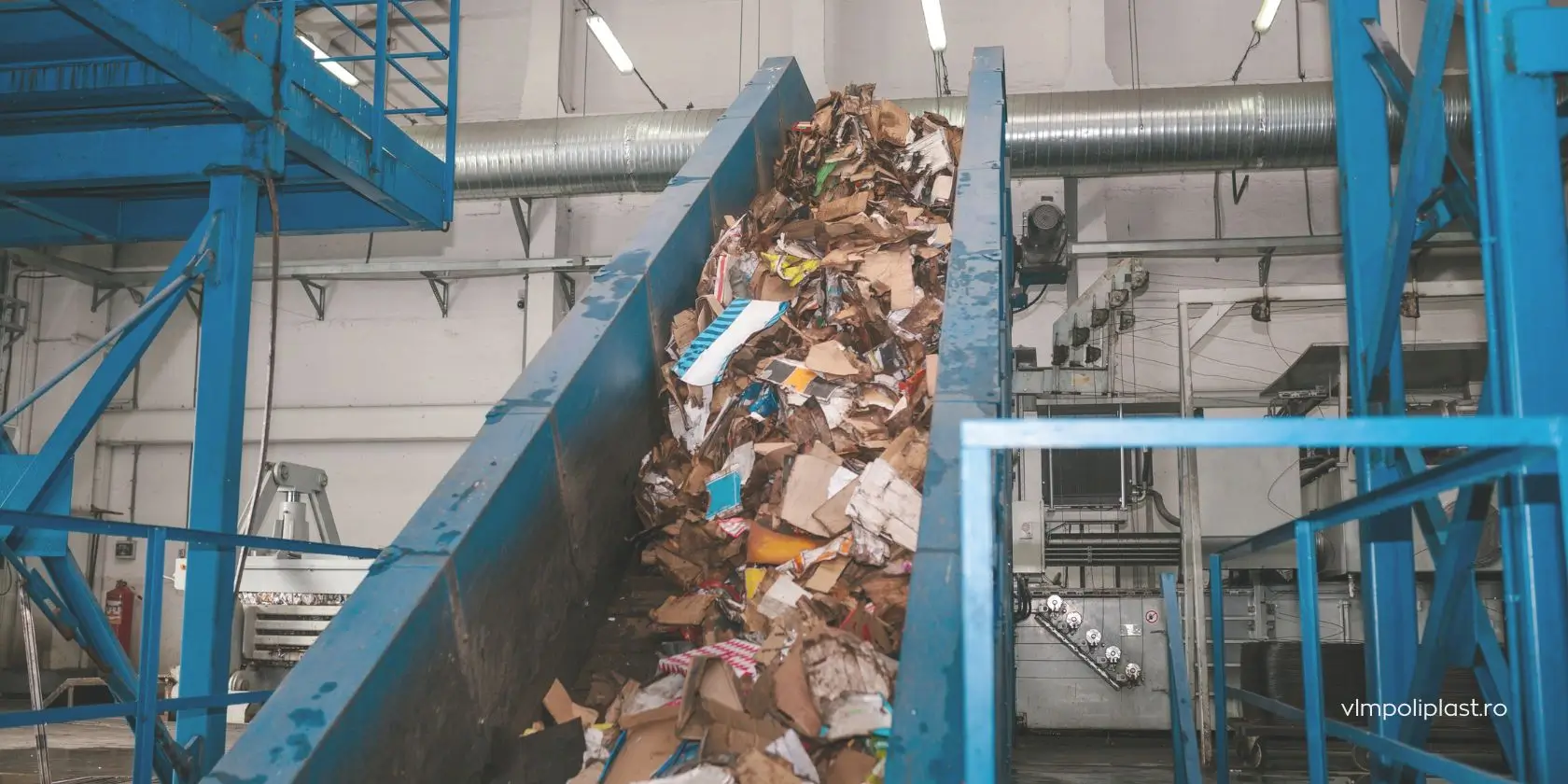
A major sports event turns a stadium into a temporary city. Tens of thousands of people arrive within the same hour, eat and drink across a short window, and leave almost everything they consumed behind as packaging. Peer-reviewed reviews of mega sporting events report waste generation ranging from roughly 0.25 to more than 7 kilograms per spectator per day, with food, paper, plastics, and packaging among the dominant fractions, and total volumes at the largest events reaching tens of thousands of tonnes.
This analysis examines the packaging systems behind that waste: how food and beverages are served at stadium scale, why beverage containers dominate the volume, and why so little of this packaging is recovered even when it carries a recyclable label. The central problem is not whether a single cup or wrapper can be recycled in theory. It is whether a crowd, a venue, and a collection system can capture, sort, and reprocess it in practice. Recyclable does not mean recycled, and stadiums expose that gap at full scale.
Source: Zafari et al. (2025), Evolution of waste management in mega-sporting events, Journal of the Air & Waste Management Association.
Food-Service Packaging at Stadium Scale
A stadium does not consume packaging the way a city does. The same 50,000 to 90,000 people eat and drink inside a three to four hour window, with demand concentrated into the minutes before kickoff, at half-time, and after the final whistle. Service has to be fast, portable, and disposable, so almost every item is handed over in single-use packaging designed to be opened standing up and discarded within minutes. Reviews of mega sporting events consistently list food, paper, plastics, and packaging among the predominant waste fractions.
Stadium food service splits into three packaging families, each with different technical demands.
| Category | Typical items | Packaging format | Common materials |
| Hot snacks and street food | Hot dogs, burgers, fries, nachos, pizza slices, popcorn | Wraps, paperboard trays, boxes, cartons, films | Paper and PE laminate, grease-resistant board, PP or PE film |
| Ready meals and cold items | Pre-packed sandwiches, salads, desserts, ice cream | Trays, lidded pots, flow-wrap, tubs | PET or PP trays, PE or PP film, PS or PP pots |
| Beverages | Soft drinks, beer, water, hot drinks | Cups, bottles, cans, lids, straws | PE-coated paper cups, PET and rPET bottles, aluminium cans, PP lids and straws |
Across all three families the same constraint applies: the packaging has to protect the product for minutes, not months, and it has to survive one-handed consumption in a moving crowd. That very short functional life is why single-use dominates, and why beverage containers, the highest-volume category, set the tone for the entire system. The next section looks at why beverages carry that weight.
Beverage Packaging and Hydration Infrastructure
Drinks are the highest-volume category a stadium serves. Most spectators buy several beverages across a match but only one or two food items, so drink containers dominate the packaging stream by both count and volume. This is also where the largest single lever sits: where a venue provides mains-fed water points and refill stations, single-use bottle volume drops sharply; where it does not, bottled water fills the gap and adds to the waste load.
Stadium beverage service runs on four container types, each with a different end-of-life profile:
- PET and rPET bottles. Widely collected and, when clean and separated, among the more recyclable formats. In a mixed, contaminated stadium bin, that advantage largely disappears.
- Aluminium cans. High recycling value and an established recovery market, but only if they are captured in a clean metals stream rather than landfilled with mixed waste.
- PE-coated paper cups. The default for draught beer and soft drinks. The thin polymer lining makes them difficult to recycle through standard paper streams.
- Reusable PP or PET cups. Designed to be returned and washed, usually under a deposit. Their environmental case depends entirely on how many times each cup is actually used.
Each of these containers carries a different environmental profile, and for reusable cups in particular the answer is not obvious: whether reuse actually beats single-use depends on washing, logistics, and return rates, not on the cup itself. The life cycle assessment section below examines where that break-even point sits and what decides it.
Portable Consumption and Crowd Movement
A stadium is consumed on foot. There are no tables, spectators eat and drink standing or walking back to a seat, and one hand is often already holding a ticket, a phone, or a child. Food-service packaging is therefore engineered for the hand and the move, not for the recycling bin it will eventually reach.
That single constraint shapes almost every packaging decision at a venue:
- One-hand opening and eating: resealable lids, tear-notches, and formats that can be held and emptied without a flat surface.
- Spill and leak resistance: grease-resistant coatings, laminated barriers, and lined cups that keep hot oil, sauce, and cold drinks contained in a moving crowd.
- Structural stability: enough rigidity to be carried up steps and through tight rows without collapsing.
- Fast disposal: the package has to leave the hand in seconds, usually into the nearest available bin regardless of what that bin is meant for.
Each of these requirements pulls in the opposite direction to recyclability. Coatings and laminates add the exact layers that recycling streams struggle to separate, lids and straws add a second and third material to a single serving, and the speed of disposal removes any chance of emptying or sorting the package first. Research on how people sort packaging waste finds that uncertainty about a package's material is the single biggest barrier to correct disposal. A stadium compresses that decision into a few seconds, with a queue forming behind every bin.
Source: Mielinger et al. (2024), Waste Management.
The result is predictable: packaging that was technically recyclable when it was filled arrives at the waste stream wet, mixed, and unsorted. The next section looks at what that does to recovery.
Why Stadium Recycling Systems Fail
Stadium recycling fails for a structural reason, not for lack of effort. The way a crowd consumes packaging is fundamentally incompatible with the way recycling infrastructure is built to work. Three pressures converge at every major event.
Compressed consumption density
A crowd of 50,000 to 90,000 people eats and drinks inside a three to four hour window, with demand concentrated into the minutes before kickoff, at half-time, and after the final whistle. Municipal sorting facilities are sized for steady, year-round throughput. A stadium produces a packaging spike that exceeds normal intake rates for a few hours, then collapses to almost nothing. Bins fill faster than they can be cleared, and the overflow ends up commingled.
Food-residue contamination
Stadium packaging leaves the hand still carrying its contents: grease, sauce, beer foam, melted ice cream, drink syrup. It is discarded wet and usually crumpled together with napkins and food scraps in the same bin. Food residue does not only spoil the individual package, it degrades the whole batch it lands in. A recyclable wrapper soaked in oil and dropped into a contaminated stream is, in practice, residual waste.
Sorting behaviour under time pressure
Correct disposal depends on knowledge, opportunity, and motivation, and a stadium strips all three. A spectator with a few minutes before kickoff has almost no time to tell PE from PP from PET, and with a queue forming behind the bin, the path of least resistance wins. Even where separate streams are provided, throughput pressure pushes people to commingle.
The decisive factor is continuous human help at the bin, not the packaging itself. At a public event of around 10,000 visitors, volunteers stationed at collection points cut contamination of the recyclable and organic streams by more than 96%. A separate study at university sporting events measured contamination at 34% with no staff present, 11% with staffed bins, and 23% again once the staff were removed. Sorting performance is not a stable property of the system: it has to be actively maintained, and high-density events can only do that in part.
Sources: Zelenika et al. (2018), Waste Management; Hottle et al. (2015), Waste Management.
This is why reported figures and real recovery diverge so sharply. Organisers usually report material separated at source, not material recovered at the end of sorting, and the two can differ by a wide margin. For context, the end-of-life recycling rate for post-consumer plastic packaging across the EU has been estimated at about 14 percent. A detailed comparison of what four recent tournaments reported against what their infrastructure could actually recover is set out in a separate data analysis across Qatar 2022, Paris 2024, and EURO 2024.
Source: Antonopoulos et al. (2021), Waste Management.
What separates the venues that beat these failure modes is rarely the bins themselves. The working hierarchy starts with source reduction, eliminating packaging that never needed to exist, then a simple three-stream collection layout (recyclables, organics, residual waste) that a spectator can decode in the two seconds they are willing to spend, backed by staffed collection points at peak flow. For deposit-bearing containers, reverse vending machines automate the capture step entirely: the refund brings the container back, and the machine keeps the stream clean.
The gap between recyclable and recycled is not an accident of stadiums. It is the normal outcome whenever packaging design is judged separately from the system that has to recover it. The next section makes that distinction explicit.
Recyclable Does Not Mean Recycled
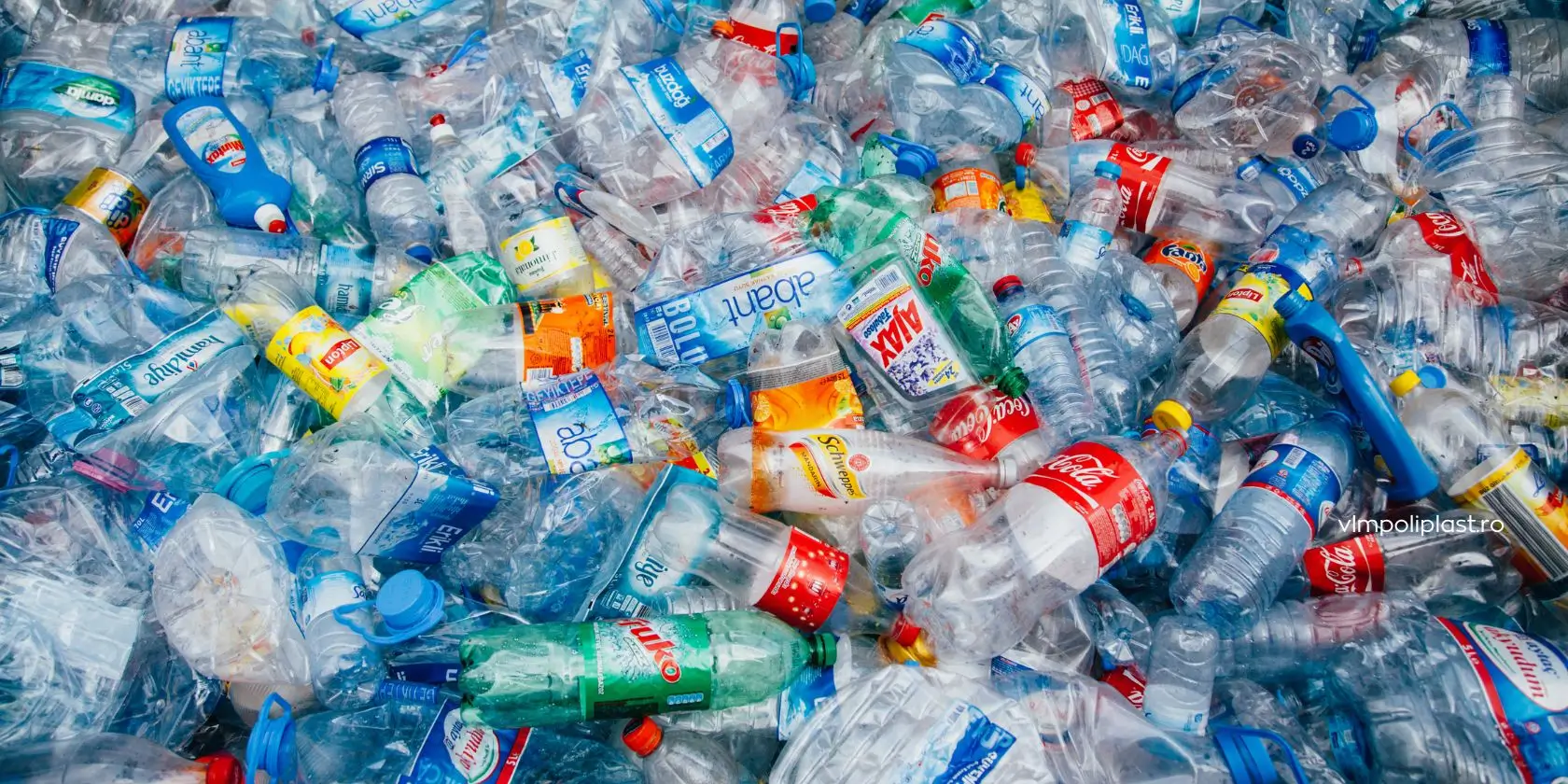
"Recyclable" describes what a package could do under ideal conditions. "Recycled" describes what actually happened to it. These two words are treated as if they mean the same thing, and at a stadium the distance between them is at its widest.
A package only becomes recycled material if it clears every stage of a chain, and each stage can stop it:
- Collection: it has to be captured in the right stream, not dropped into a mixed bin.
- Sorting: a facility has to identify its polymer correctly, usually by near-infrared scanning.
- Processing: a recycler has to be able to reprocess it economically.
- Contamination threshold: it has to arrive clean enough to keep its batch within processing limits.
A cup or wrapper can be perfectly recyclable by design and still fail at any one of these points. That is why a recyclability label on the package guarantees nothing about recovery: the outcome is decided by the system the package meets, not by the claim printed on it.
What makes packaging "100% recyclable"?
In practice, a package is treated as recyclable only when three things hold together: it is made from a single, widely collected polymer; its colour and additives let a sorting scanner read it; and a real collection and reprocessing route exists for that material in the place it is discarded. Remove any one of these and the "recyclable" claim becomes theoretical. A design can satisfy the first two and still fail the third, which is exactly what happens at events held across regions with different infrastructure.
Why are bottles labelled recyclable not always recycled?
A PET bottle is one of the more recyclable formats available, yet a recyclable bottle and a recycled bottle are still different things. A bottle that is capped with a different polymer, wrapped in a full-shrink sleeve that hides it from the scanner, dropped into a mixed bin, or contaminated with drink residue can miss recovery entirely. The claim describes the bottle's potential, the recovery rate describes the system's reality, and the two only meet when collection, sorting, and reprocessing all line up.
Flexible packaging sits at the difficult end of this. Lightweight films and laminates make up only a small share of packaging by weight, around 3 to 4 percent of European packaging, yet they are among the hardest formats to recover: thin films escape ballistic separators into the residual fraction, and complex laminates can contaminate the valuable PP and PE streams they fall into. At a stadium, where most food-service packaging is exactly this kind of flexible film, the recyclable-but-not-recycled gap is the default, not the exception.
Source: van Velzen et al. (2020), Flexible laminates within the circular economy.
The practical conclusion is consistent across every section of this analysis: recyclability has to be designed for the worst infrastructure a package will meet, not the best. The remaining sections look at what that means for the systems and materials used at events.
PPWR Implications for Event Food-Service Packaging
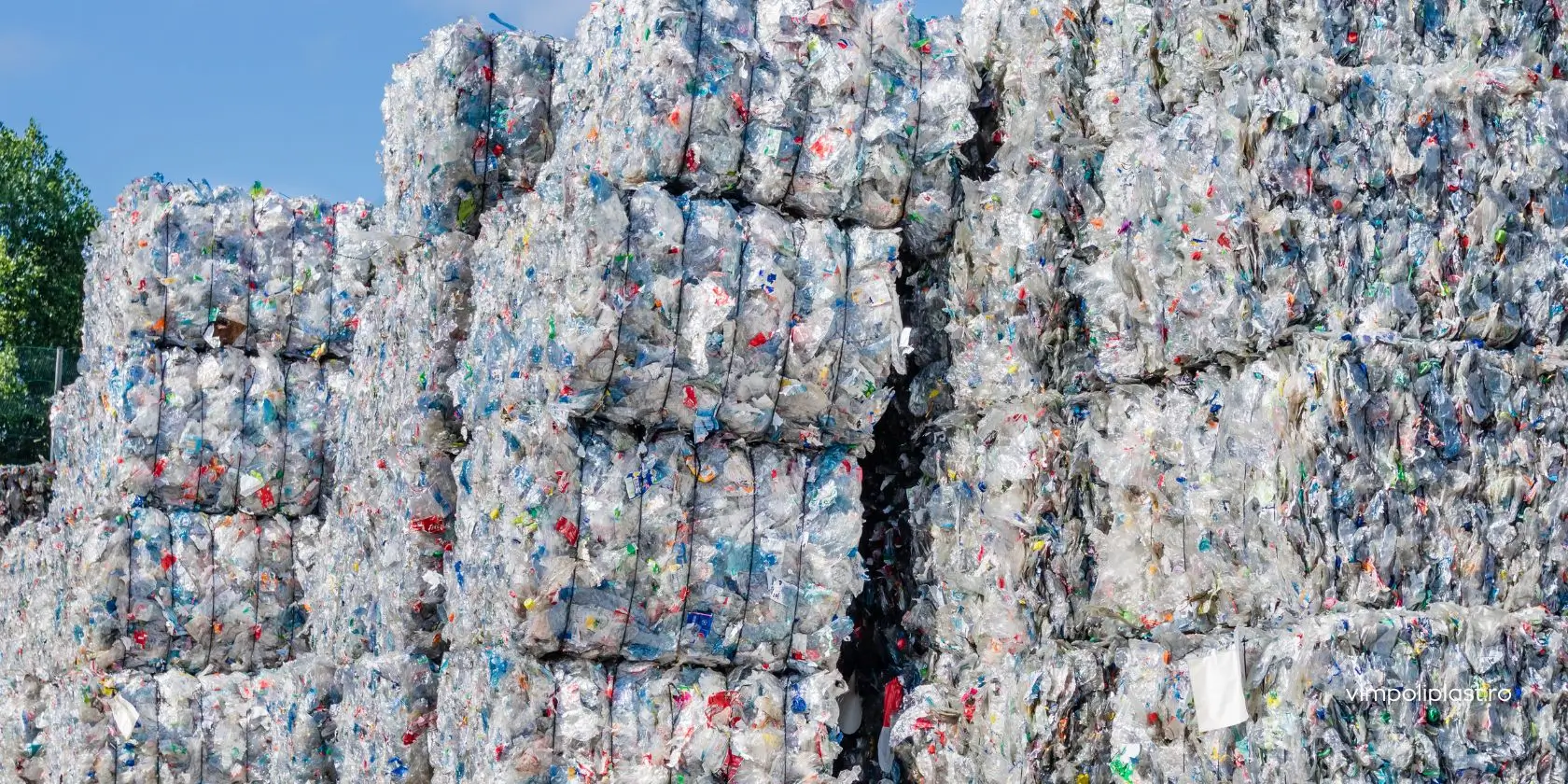
The Packaging and Packaging Waste Regulation (Regulation (EU) 2025/40) applies from 12 August 2026 and converts most of the design questions in this analysis from good practice into legal requirements for any packaging placed on the EU market, including everything served inside an EU stadium.
Recyclability becomes a market-access condition. Under Article 6, from 1 January 2030 packaging must be designed for recycling according to criteria the European Commission is defining through delegated acts, and graded into recyclability performance grades. Formats that cannot meet the criteria, which is the structural risk facing non-separable multilayer laminates, lose access to the market rather than merely losing sustainability credentials. For venues and their suppliers, the material choices in the food-to-packaging matrix below stop being preferences and become compliance decisions.
PFAS in food-contact packaging is restricted first. From 12 August 2026, food-contact packaging containing intentionally added PFAS above defined thresholds cannot be placed on the market, under the Article 5 PFAS restriction. This lands directly on grease-resistant board, the default format for hot stadium food, where PFAS-based treatments have historically delivered the grease barrier. Vendors relying on treated board need confirmed PFAS-free alternatives before that date.
Reuse targets reach the beverage counter. Article 29 sets binding reuse targets for beverage packaging from 2030, with defined exemptions. Venues already operating deposit-based reusable cup systems are, in effect, ahead of an obligation the rest of the market still has to build.
Documentation and cost pressure follow. From 12 August 2026 packaging requires a declaration of conformity with supporting technical documentation. Extended producer responsibility fees are to be modulated by recyclability, under Article 6(8) in conjunction with Article 45. The modulation applies 18 months after the Article 6 delegated and implementing acts enter into force, so it follows the 2030 market restriction rather than preceding it. Either way, hard-to-recycle formats become progressively more expensive to place on the market. The direction of travel is uniform: packaging that the collection systems described in this analysis can actually recover will cost less and circulate freely; packaging they cannot recover will be priced out or excluded.
Can Stadiums Operate Without Single-Use Packaging?
Not entirely, and the honest answer matters. A stadium can remove a large share of single-use packaging, but not all of it, and pretending otherwise leads to systems that look circular without behaving that way.
The biggest gains come from beverages, the highest-volume category. Paris 2024 served drinks largely through reusable cups, refill fountains, returnable glass, and personal water bottles, and reported roughly half as much single-use plastic by weight as a comparable earlier edition, with a sharp drop in the number of single-use bottles. That is real progress, and it shows where the lever is: drinks, where the same container is handed over thousands of times and can be collected and washed in a closed loop.
But the same event showed the limits. Some drinks were poured into reusable cups straight from single-use plastic bottles, so the primary packaging never disappeared. Branded reusable cups were attractive enough to be carried home as souvenirs, leaving the reuse loop after a single use. A reusable system only works if the cups come back, and a souvenir is a cup that does not.
Why do stadiums still use single-use packaging?
Several requirements are difficult to meet any other way:
- Hot and greasy food needs grease-resistant, often laminated formats that reusable tableware cannot easily replace at speed.
- Food safety and hygiene favour sealed single-use packs for many pre-made items, a preference that strengthened after recent shifts in hygiene expectations.
- Throughput at peak service leaves no time for a deposit-and-return step on every item.
- Washing and logistics for reusables require space, water, and labour that not every venue can provide at scale.
So the realistic target is not zero single-use packaging. It is a split: closed-loop reuse for beverages and other high-frequency items, and single-use packaging that is designed for genuine recovery wherever reuse is impractical. A stadium that pursues both, rather than claiming to eliminate single-use entirely, is the one that actually reduces waste.
The next two sections look at each half of that split: how reusable systems perform, and how single-use packaging has to be designed when it cannot be avoided.
Reusable Packaging Systems: A Life Cycle Assessment
A reusable cup is not an environmental win on its own. It starts with a higher footprint than a single-use cup, because it takes more material and energy to make, and every wash adds water, energy, and detergent. The gain only appears once that initial cost is spread across enough uses. So a reusable system is not really about the cup, it is about the closed loop that brings the cup back, cleans it, and sends it out again.
That loop has three moving parts, and each one decides whether the system pays off:
- Collection: cups have to return, usually pulled back by a deposit the spectator reclaims. Without a return incentive, cups are lost, binned, or taken home.
- Washing: cups are cleaned to a hygiene standard between uses, typically in industrial dishwashers, on or off site.
- Redistribution: clean cups go back into service fast enough to meet peak demand without an oversized stock.
How many times must a reusable cup be used to be worth it?
The short answer: there is no single figure. Depending on cup material, washing method, transport distance, and how often cups are actually returned, life cycle assessment studies place the environmental break-even between roughly 10 and 150 uses. How many uses a cup actually reaches, set mostly by the return rate, matters more than the material it is made from.
An early life cycle assessment of a reusable PP cup at a major event found it needed at least 10 uses to beat its single-use equivalent. A more recent analysis put the break-even far higher: with offsite industrial washing involving around 20 km of transport and energy recovery at end of life, reusable plastic cups reached break-even at about 150 uses for climate change and energy demand, while for acidification, eutrophication, and water use, single-use PP cups stayed ahead even with unlimited reuse.
The gap between those numbers is driven by washing and logistics, not by the cup itself. The break-even is a property of the system, not of the cup, which is why two venues using the same cup can land on opposite sides of it.
What decides whether the system works?
The return rate, above everything else. A cup that is lost, damaged, or kept as a souvenir never reaches its break-even, so every cup that fails to come back drags the whole system toward single-use impact. Deposit-return models consistently outperform non-refundable reusable models for exactly this reason: a refund at the counter turns the spectator into the collection system. Comparative work on festival cup models found that refundable schemes had markedly lower loss and damage rates than schemes with no deposit.
How long do reusable cups last, and how often are they washed?
A robust polypropylene event cup is built to survive dozens to low hundreds of cycles, which is what makes clearing the break-even realistic in a well-run loop. It is washed between every use to a food-contact hygiene standard, which is also why washing is treated as a core cost of the system rather than an afterthought: the energy and water of repeated industrial washing are part of what each use has to justify.
Sources: Garrido et al. (2007), International Journal of Life Cycle Assessment; Cottafava et al. (2021), Sustainable Production and Consumption; Šuškevičė et al. (2020), Sustainability.
The takeaway is consistent with the rest of this analysis. A reusable system delivers an environmental benefit only when the venue runs collection, washing, and redistribution well enough to push each cup well past its break-even. The cup is the easy part. The closed loop is the system.
Food Protection Versus Packaging Reduction
Cutting packaging and protecting food pull in opposite directions, and ignoring that tension produces worse outcomes, not better ones. Packaging exists to keep food safe and edible. Strip too much of it away and the food spoils, which trades a packaging problem for a food-waste problem that usually carries a far larger environmental cost.
The protection a package provides comes mostly from its barrier: how well it keeps oxygen and moisture away from the product. Two measures describe this:
- OTR (oxygen transmission rate): how much oxygen passes through the film, which governs how fast fats go rancid and flavours degrade.
- WVTR (water vapour transmission rate): how much moisture passes through, which governs whether dry foods go soft or moist foods dry out.
The difficulty is that the structures giving the best barrier are usually the hardest to recycle. High-barrier protection has traditionally come from multilayer laminates that combine different polymers, sometimes with a metallised or specialty barrier layer. Those combinations deliver long shelf life but are exactly what sorting and recycling systems cannot separate. The more protective the structure, the less recoverable it tends to be.
Where monomaterial structures fit, and where they do not
Single-polymer (monomaterial) structures are far easier to recover, and for short shelf-life food service, which is most of what a stadium sells, their barrier is often good enough. The reprocessing advantage is real: a recycling simulation comparing functionally equivalent PET and PP structures found the polypropylene structure could be reprocessed around ten times while keeping its mechanical properties, whereas the PET structure became brittle and unsuitable for equivalent reuse. For items consumed within minutes, switching from a complex laminate to a well-designed monomaterial film loses little protection and gains genuine recyclability.
Source: Seier et al. (2023), Polymers.
The limit is also honest: where a product genuinely needs extended shelf life or a high oxygen or moisture barrier, a simple monomaterial film may not protect it adequately, and forcing the substitution can cause spoilage. The right question is therefore not "monomaterial or not" in the abstract, but whether the specific product's real barrier needs can be met by a recyclable structure. For most stadium food service the answer is yes; for a minority of products it is not, and that minority deserves a barrier solution rather than a recyclability claim it cannot support.
Which packaging fits which stadium food?
The right structure follows from the food, not the other way around. Stadium food has an unusually short packaging life, minutes between counter and consumption, so most products need far less barrier than retail equivalents. The matrix below maps typical stadium food categories to the packaging that protects them adequately while staying compatible with the collection systems described in this analysis.
| Food served | Packaging requirement | Suitable format | End-of-life reality |
| Hot meals (burgers, fries) | Grease resistance, heat tolerance, minutes of holding time | Monomaterial PP trays and films; grease-resistant board | Clean PP is identified by NIR sorting; heavily soiled board drops to the residual stream |
| Sandwiches and wraps | Moisture control over a few hours, product visibility | Monomaterial PE film; board with separable window | PE film is recyclable where film collection exists; fused paper-plastic combinations are not |
| Dry snacks (crisps, nuts) | Puncture resistance, grease barrier | Monomaterial PP film; metallised multilayer is common but avoidable at this shelf life | Mono PP sorts cleanly; metallised laminates go to residual |
| Popcorn | Short life, light grease resistance | Paper or board tub, uncoated where possible | Recyclable or compostable if lightly soiled; otherwise residual |
| Frozen desserts | Moisture and cold resistance | Monomaterial PP cup; board with minimal lining | PP cups sort well; lined board rarely does |
| Fresh fruit and salads | Visibility, ventilation, no thermal demand | Monomaterial PET or PP trays | Both sort reliably when returned clean |
The pattern is consistent: the shorter the functional life, the stronger the case for the simplest structure. Barrier layers, metallisation, and multilayer laminates solve problems most stadium food does not have, and each one is paid for twice, once at purchase and once at end of life, when the format cannot be recovered.
This is the core trade-off behind every packaging decision at an event: protect the food, reduce the packaging, and recover what is left, in that order of honesty rather than slogan.
What Sports Events Teach Us About Circular Packaging
A stadium is a circular economy stress test. It compresses a town's worth of food and drink consumption into a few hours, then asks the packaging system to recover it under the worst possible conditions: high volume, heavy contamination, and almost no time to sort. What survives that test tells you what actually works, and what only works on a label.
Three lessons carry well beyond sport.
Infrastructure decides, not the label
The same package can be recovered in one city and landfilled in the next. Recyclability printed on packaging is a claim about potential; recovery is a property of the system the package meets. Wherever consumption outruns the local capacity to collect and sort, the label stops mattering. A continent-spanning event with many different waste regimes does not produce one recovery rate, it produces a mosaic of locally determined outcomes.
Design for the weakest infrastructure, not the best
If a package has to perform across many systems, it should be built for the least capable one it will meet. In practice that means simple single-polymer structures, free of colours and additives that block sorting, compatible with standard mechanical recycling streams regardless of jurisdiction. A package optimised for an ideal facility and dropped into an average one behaves like residual waste.
Reuse and recovery are systems, not products
A reusable cup only helps if the loop returns and washes it; a recyclable wrapper only helps if collection, sorting, and reprocessing all line up. The packaging is the easy half. The logistics around it decide the result, which is why switching materials without building the system rarely moves the real numbers.
The single idea underneath all three is the same. Real recyclability is not a fixed property of a package. It is the outcome of an encounter between the package, the moment it is discarded, and the infrastructure that receives it. Stadiums simply make that encounter impossible to ignore. The packaging decisions that hold up there, honest about protection, designed for the weakest system, and backed by real collection, are the ones that hold up everywhere else too.
Frequently Asked Questions
Why isn't all packaging recyclable?
Because recyclability depends on more than the material: a package is only recyclable in practice if its polymer is widely collected, a sorting facility can identify it, and a recycler can reprocess it economically.
Many packages fail at least one of these conditions. Multilayer laminates combine polymers that cannot be separated, dark colours are invisible to sorting scanners, and food residue contaminates the stream. A package can be recyclable in theory and still have nowhere to actually go.
Can multilayer plastic be recycled?
Usually not through standard mechanical recycling, because the different polymers are bonded too tightly to be separated and sorting systems cannot assign them to a clean polymer stream.
Multilayer packaging, sometimes including metallised or barrier layers, tends to end up in the residual fraction and can contaminate valuable PP and PE streams. Specialised processes exist but are not yet widely available.
Are reusable cups always more sustainable?
No. A reusable cup starts with a higher production footprint and only outperforms single-use once it has been returned and washed enough times.
Life cycle studies place that break-even between roughly 10 and 150 uses, depending on washing method, transport, and return rate. For some impact categories, such as acidification and water use, single-use PP cups can remain ahead even with unlimited reuse. The system around the cup, not the cup itself, decides the outcome.
What recycling systems work in sports venues?
The systems with measurable results combine source reduction, deposit-return schemes for beverage containers, and clearly separated collection streams for recyclables, organics, and residual waste.
Staffing matters more than bin design: studies at public events show contamination dropping from around 34% to 11% when collection points are staffed, and volunteer-assisted sorting cutting contamination by over 96%. Closed-loop reusable cup schemes work where the deposit brings cups back at high rates.
What packaging is suitable for stadium food vendors?
Packaging matched to a very short functional life: the product is consumed within minutes, so extended barrier performance is rarely needed.
That points to monomaterial PP or PE films and trays, grease-resistant board for hot food, and formats made from a single, widely collected polymer that near-infrared sorting equipment can identify. Complex multilayer laminates deliver protection most stadium food does not need, at the cost of recyclability the venue cannot afford to lose.
Which food packaging materials comply with PPWR?
The PPWR does not approve materials as such: it requires that, from 1 January 2030, packaging placed on the EU market meets recyclability criteria defined through design-for-recycling rules.
Monomaterial PE and PP structures aligned with established design-for-recycling guidelines are best positioned to meet them, while non-separable multilayer laminates face the highest risk. Separately, food-contact packaging must comply with the restriction on intentionally added PFAS from 12 August 2026.
How do stadiums reduce packaging waste?
Mainly through reuse and design, not through recycling after the fact.
The largest gains come from beverages: reusable cup systems with deposits, refill points, and returnable containers, which cut single-use volume sharply when collection works. The harder part is recovering whatever single-use packaging remains, because contamination and time-pressed disposal limit how much is actually recycled. The venues that perform best combine closed-loop reuse with packaging designed for the recycling infrastructure it will actually meet.
Who does PPWR apply to?
The EU Packaging and Packaging Waste Regulation (Regulation (EU) 2025/40) applies to anyone who places packaging on the EU market, including producers, importers, and brand owners, across all packaging types.
For food-service packaging used at events held in the EU, its recyclability criteria apply from 2030, and the restriction on intentionally added PFAS in food-contact packaging applies from 12 August 2026. Packaging that does not meet the applicable requirements cannot be freely placed on the market.
Evaluating your packaging for PPWR 2030?
For clients already using VLM Poliplast structures, we assess whether the films we supply meet the PPWR recyclability criteria applying from 1 January 2030 and identify equivalent monomaterial alternatives compatible with standard mechanical recycling streams.
Contact our technical team Sustainability overview Technical glossary